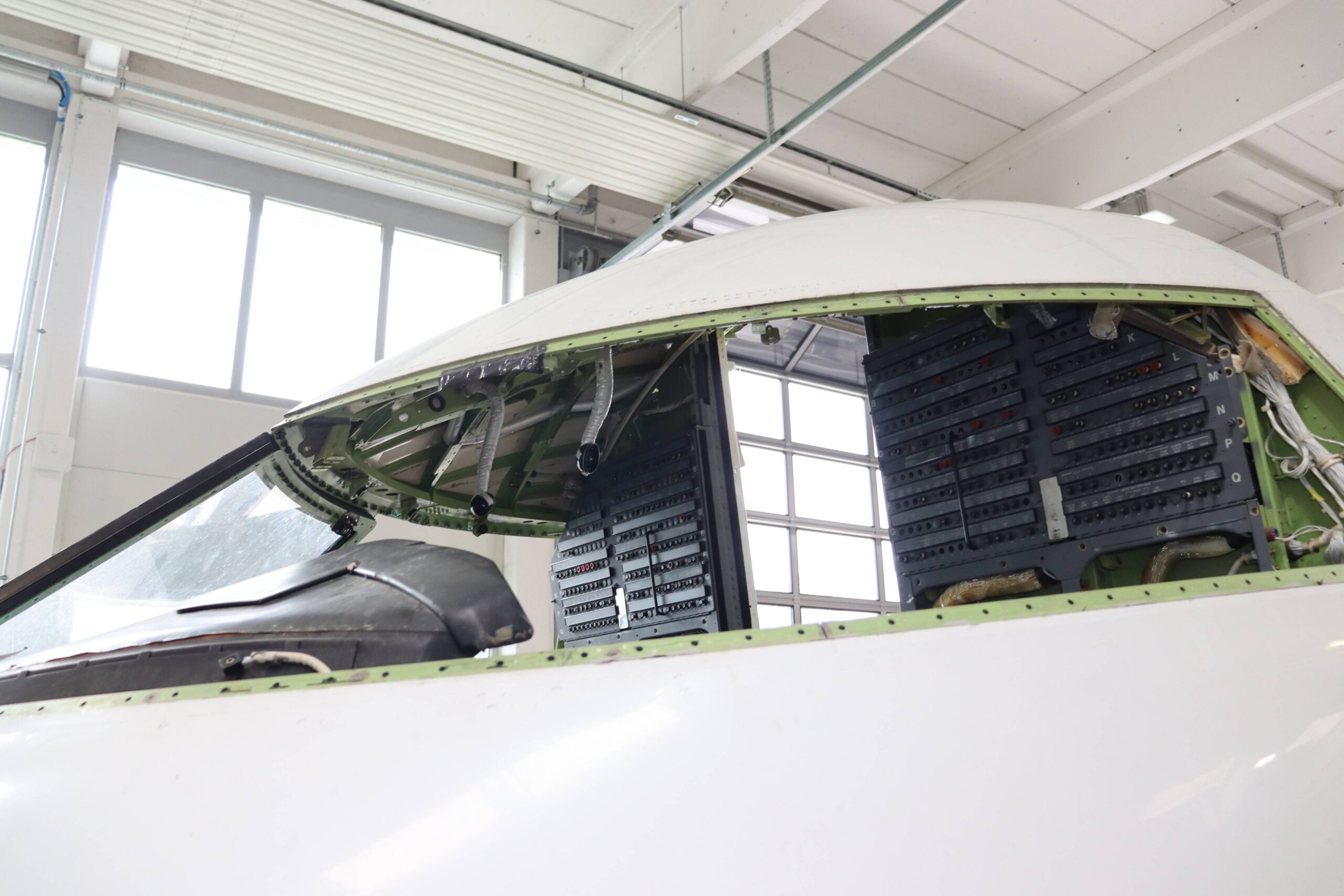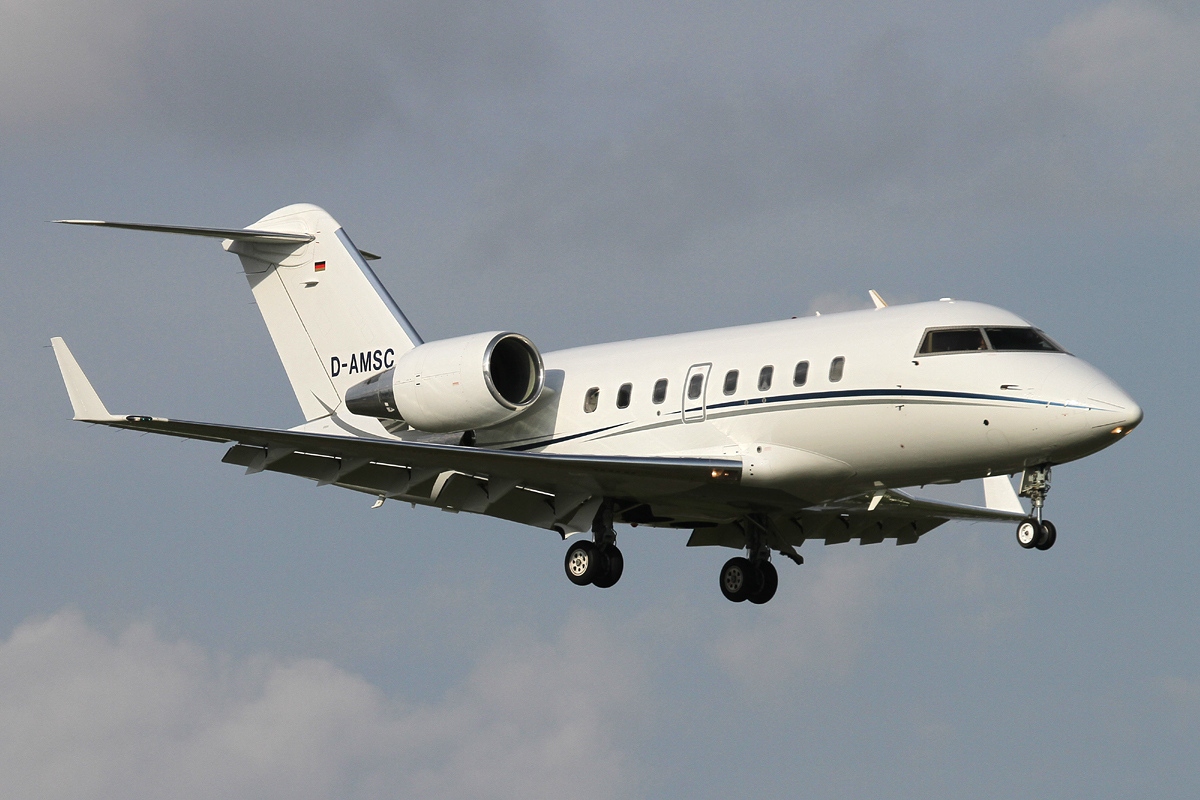
The use of original cockpit sections in our simulators offers unmatched authenticity and precision, preserving the exact dimensions, materials, and layout of the original aircraft. This ensures a highly accurate representation of the cockpit environment look and feel.
Beyond technical fidelity, repurposing existing cockpit structures supports environmental sustainability through upcycling—reducing waste and minimizing the need for new manufacturing. This approach not only honors our aviation heritage but also aligns with modern ecological values, making it a responsible and effective choice for simulator projects.
About the Aircraft
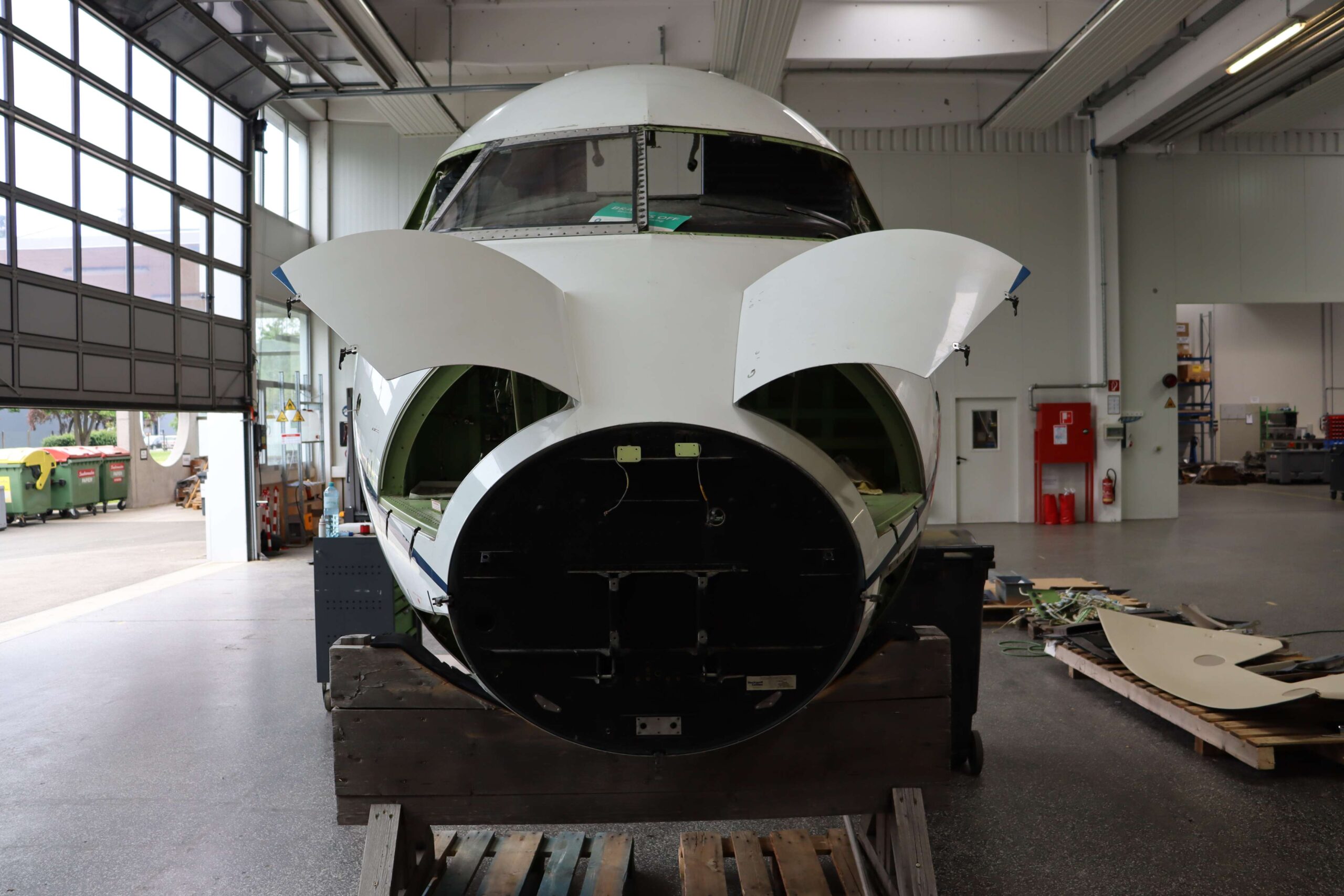
- Type & Model: Bombardier Challenger 604 (CL-600-2B16)
- Registration: D-AMSC (ex I-IRCS, ex N326FX)
- Year of manufacture: 2000
- SN: 5464
- Last Operator: MHS-Aviation
This aircraft, built in 2006 in Texas, was initially used by Bombardier as a presenter and company shuttle at several Bombardier bases. It was subsequently operated by a Swiss logistics service provider and finally by a charter company based in Germany flying to destinations in Europe and the Middle East.
The Final Flight of D-AMSC
After 17 years of service, in January 2017 the aircraft was retired after a wake turbulence incident. While flying over the UAE the aircraft was hit by the wake turbulence of an Airbus A380, which flung it into a steep dive. Fortunately, the crew was able to recover from the dive and land safely in Muscat, but due to the high loads the airframe suffered irreparable damage and the plane had to be written off. The nose was sound and was acquired by AXIS. Thus, while this aircraft’s flying days have ended, its cockpit continues to serve aviation safety and pilot training.
From Airframe to Simulator
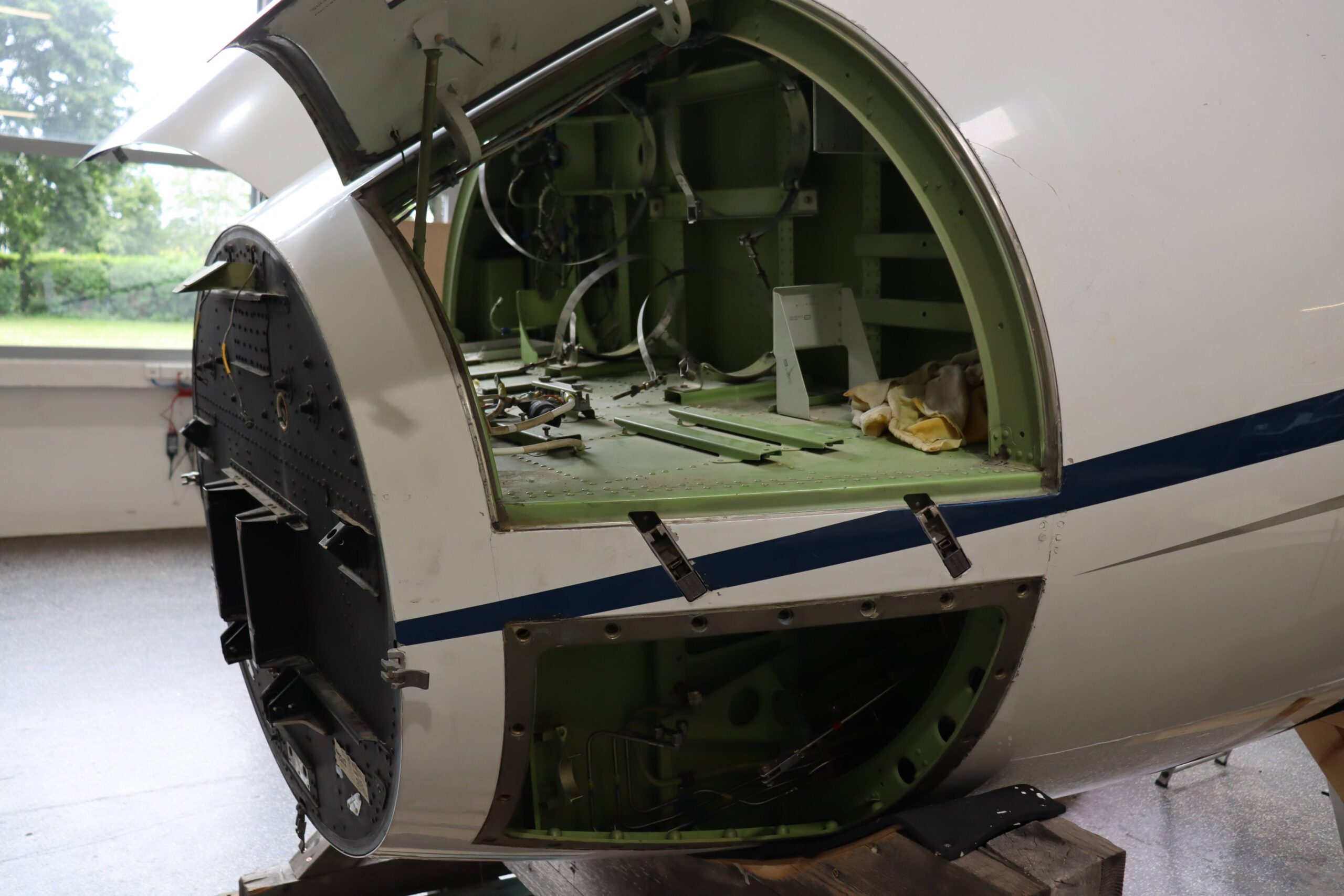
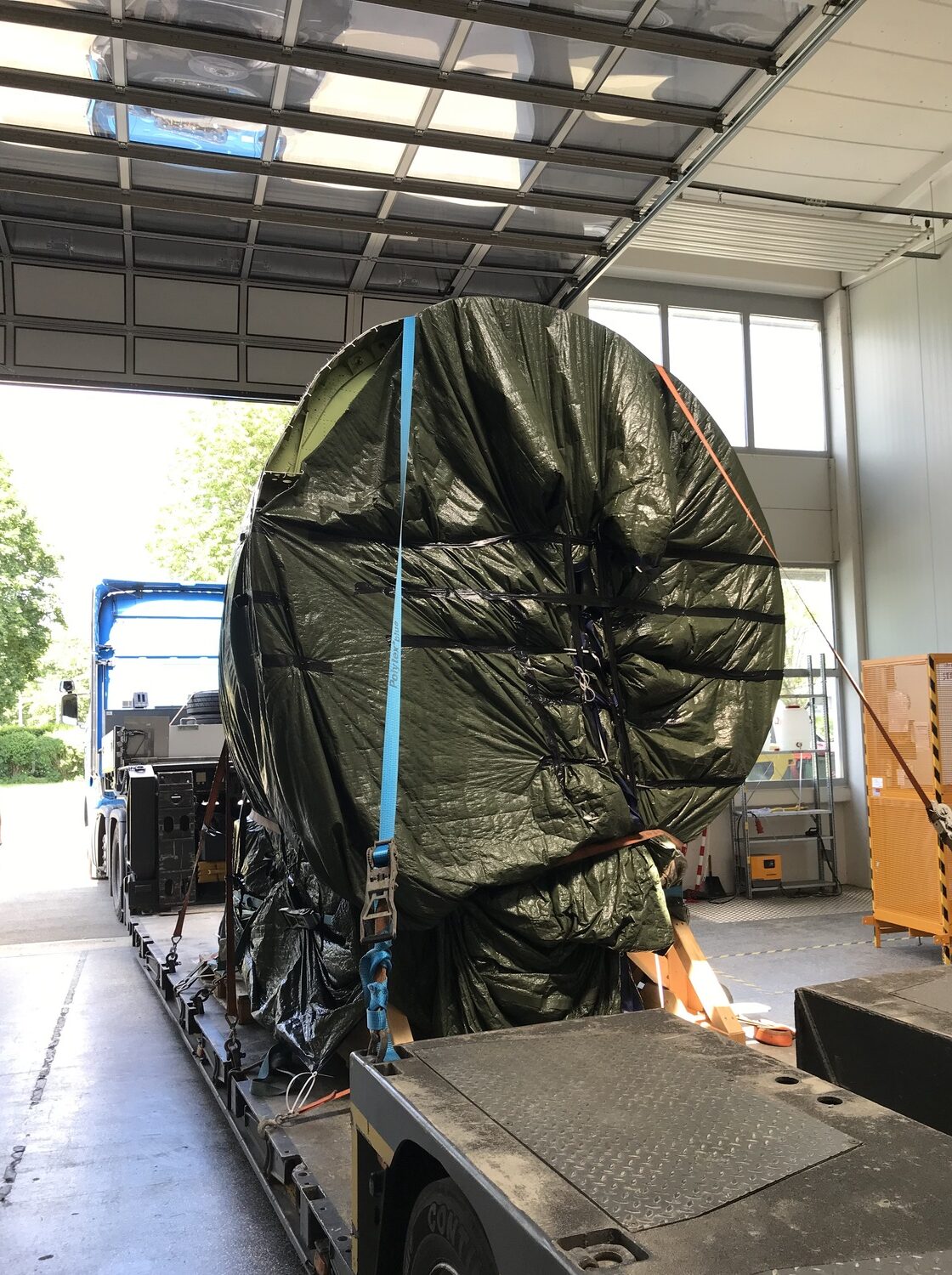
The nose section was chosen due to its excellent condition. The aircraft was written off after a wake turbulence incident, but the cockpit was, if not good as new, still in great shape. The fuselage of the plane was transported in the legendary Antonov transport. Prior to tear down all usable components were salvaged, including the cockpit.
The cockpit was carefully separated from the fuselage, secured on a sturdy wooden pallet, and safely wrapped with shrink film.
It was then shipped to Austria via truck directly to our facility.
Subsequently, the cockpit was fully dismantled and all components were removed, leaving only the outer shell and structural framework.
The parts were then partially repurchased, replicated, or custom-manufactured using our in-house 3D printer.
Based on this, we completely rebuilt the cockpit to create a highly accurate replica for use in our simulator.
Simulator Integration
This Level D simulator uses the original cockpit structure, throttle quadrant, control yokes and buttons. The instrumentation is a rehost solution with original controls.
Preserving Aviation Heritage
“Every AXIS simulator carries a real story. By transforming actual aircraft components into training devices, we connect past aviation with the future of flight safety.”