19. Mai 2026
How flight simulator fidelity is achieved
Our previous blog explored how simulator fidelity is measured. The next step is understanding how it is achieved in practice to deliver quality training.
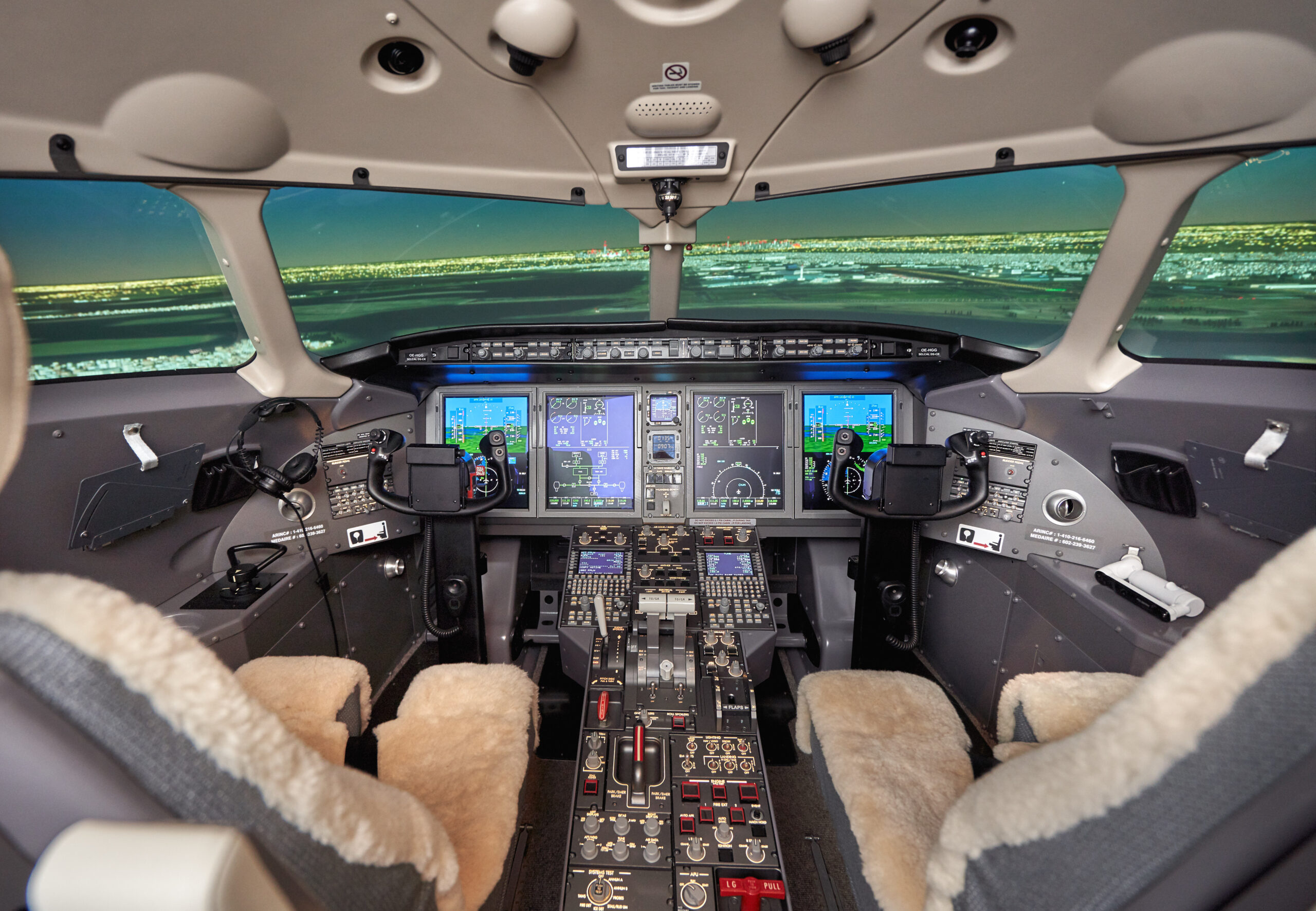
Our previous blog explored how simulator fidelity is measured. The next step is understanding how it is achieved in practice to deliver quality training. So, how do manufacturers ensure a simulator performs like a real aircraft?
Building the model with real aircraft data
Data driven modelling is central to the manufacturing process. High fidelity simulators are built using detailed, aircraft specific data rather than generic assumptions. This includes aerodynamic data, control laws and engine performance, but the most valuable input comes from dedicated flight test campaigns. These are designed specifically to capture how an aircraft behaves across a wide range of conditions and manoeuvres.
At AXIS Flight Simulation, we work with our dedicated partner Aeroset Technology, part of the AX Aero Group, to carry out flight test campaigns and data acquisition for our simulators. This approach provides a more complete and accurate dataset than standard manufacturer information alone, creating a stronger foundation for high fidelity models. By using this data, the simulator can replicate real flight behaviour with a high degree of accuracy.
Refining behaviour through engineering
Once the initial model is in place, it is refined through a process of repeated testing and updating. The underlying aerodynamic behaviour, for example, is adjusted and validated until the simulator responds within the same tolerances as the real aircraft. Where direct flight test data is not available, advanced computer simulations are used to complete the model. The objective is consistency. Every control input should produce the same response, timing and outcome as it would in the aircraft itself.
Integrating systems for a consistent experience
Strong fidelity depends on more than the flight model. A simulator is a complex system where multiple elements must work together seamlessly. Control loading, motion, visual systems and avionics all contribute to how the aircraft is perceived by the pilot. These components are tested together to ensure they remain aligned, as even small differences between them can affect the overall realism. Integration testing is therefore a key stage, often carried out over several iterations both during manufacturing and after installation.
Working within regulatory standards
Development takes place within a strict regulatory framework. Standards such as EASA CS FSTD(A) and FAA Part 60 define how closely a simulator must match the behaviour of an aircraft. These standards set clear performance limits for specific manoeuvres and flight conditions, which must be met before the simulator can be approved for training. In practice, manufacturers often go beyond these requirements, using a broader set of data to validate fidelity across a wider envelope.
Testing against real world performance
Testing plays a central role in confirming the simulator behaves as intended. This is based on both objective data and pilot experience. Quantitative testing involves comparing simulator performance directly against real flight test data. Parameters such as climb performance, approach speeds, stall characteristics and control response are measured and verified against defined tolerances. This provides a clear, measurable benchmark for fidelity.
Alongside this, qualitative testing is carried out by type rated pilots. They fly the same manoeuvres in both the aircraft and the simulator, assessing handling qualities, motion cues and visual representation. This step is important because it captures the subtleties of aircraft behaviour that are not always visible in raw data. In some cases, flight test pilots are also involved to assess areas that fall outside normal operational experience.
Finally, independent aviation authorities conduct their own evaluations using prescribed test profiles and checklists. This ensures the simulator meets all regulatory requirements and is suitable for training use.
Maintaining fidelity over time
Achieving simulator fidelity is not a one-time task. It is an ongoing process of refinement, supported by data, engineering expertise and continuous testing. The closer the simulator behaves to the real aircraft, the more effective it becomes as a training tool, allowing pilots to develop skills that transfer directly to real world operations.
At AXIS Flight Simulation, this approach underpins the development of every device. By combining detailed aircraft data, dedicated flight testing and engineering expertise, we consistently deliver Level D Full Flight Simulators (FFS) that meet the highest training standards.
Weitere Artikel:
3. Mai 2024 – 5 min read
eVTOLs: The new dawn of flight training

15. Oktober 2024 – 2 min read
AXIS Flight Simulation and Propair Flight to set new industry benchmark with VR/MR pilot training solution
17. Juni 2025 – 2 min read