September 16, 2026
How AXIS Flight Simulation is reshaping helicopter pilot training
High-fidelity flight simulation has been traditionally associated with the more advanced stages of pilot training. But for helicopter pilots, where trainees must develop precise coordination and...
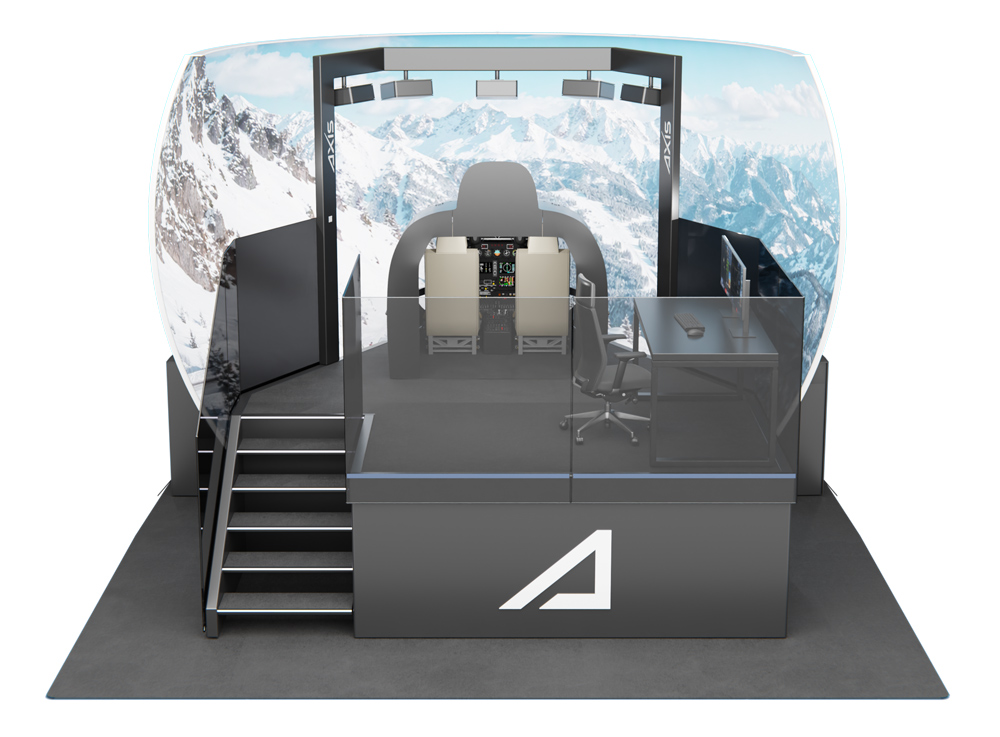
High-fidelity flight simulation has been traditionally associated with the more advanced stages of pilot training. But for helicopter pilots, where trainees must develop precise coordination and aircraft handling skills from the outset, there is a compelling case for introducing simulator technology much earlier in the learning journey.
The value of early familiarisation in helicopter pilot training
Piloting a helicopter is very different from flying a fixed-wing aircraft, particularly when it comes to how the vehicle is controlled and manoeuvred. Helicopter pilots must coordinate the cyclic and collective alongside the anti-torque pedals, while managing rotorcraft-specific flight dynamics during hovering, low-speed flight, and transitions between Instrument Flight Rules (IFR) and Visual Flight Rules (VFR).
This makes early familiarisation particularly valuable. Giving pilots the opportunity to become accustomed to helicopter-specific controls and handling characteristics in a simulated environment, helps to build a stronger foundation before applying those skills inflight.
How technology is strengthening the case for helicopter simulation
Accurately recreating these helicopter-specific behaviours has traditionally been challenging for simulator developers. Hover performance and the aircraft’s response during low-speed and coordinated flight require dedicated rotorcraft flight-dynamics modelling.
However, advances in simulation, together with sophisticated motion and visual systems, are allowing simulated helicopter flight to more closely represent the aircraft and its operating environment.
During hovering or low-speed flight, pilots depend on subtle visual and motion cues alongside precise control inputs. Accurately recreating these allows users to practice the continuous assessment and fine control adjustments that are central to helicopter flight. Visual technology can also recreate weather and operational surroundings in real time, supporting the recreation of specialist scenarios, such as offshore operations.
Integrated training models allow a range of technologies to support different stages of learning rather than relying solely on a full flight simulator (FFS). Virtual and mixed reality can support cockpit familiarisation and procedural learning, whilst AI has the potential to complement performance analysis and debriefing.
Together, these technologies create more opportunities for pilots to build and reinforce key skills before moving into more complex training environments.
Bringing this approach to helicopter training
AXIS Flight Simulation is leading the way by developing rotary-wing training devices that integrate our proven technology to deliver high fidelity training solutions. Building on our fixed-wing experience, we are applying our expertise across aircraft systems, flight dynamics, avionics and sourcing high-quality flight data to the newly announced AX-DH and Flight Training Device (FTD) helicopter simulators.
Both devices are being developed around the unique demands of rotorcraft operations. Aircraft-specific cockpits and helicopter flight dynamics will support training scenarios ranging from hovering and offshore operations to Night Vision Goggle (NVG) flights and IFR/VFR transitions. The devices draw on the engineering disciplines already used across our fixed-wing portfolio, while incorporating the specialised modelling required to recreate helicopter handling and operating environments.
The two devices together allow different levels of simulation to be matched more closely to the training requirement, supporting the wider shift towards simulation as part of an integrated training journey.
Christian Theuermann, Executive Board Member at AXIS Flight Simulation, says: “Our decision to expand into helicopter simulation has been driven by growing market and customer demand. It is a natural extension of our existing capabilities, applying our high-fidelity simulation expertise to the specific needs of helicopter operators.”
Making simulation part of the journey earlier
As simulation technology becomes more advanced, the role it can play in helicopter training is expanding. Rather than reserving high-fidelity simulation for later stages, operators can increasingly use different training devices at the point where they offer the most value.
More articles:

June 12, 2024 – 2 min read
Celebrating 20 Years of Innovation at AXIS Flight Simulation
December 4, 2025 – 2 min read
What is the AXIS AI Debriefing Station?
August 13, 2025 – 2 min read